Famous Filming Locations Near UNTITLED
September 28, 2026
4 min read

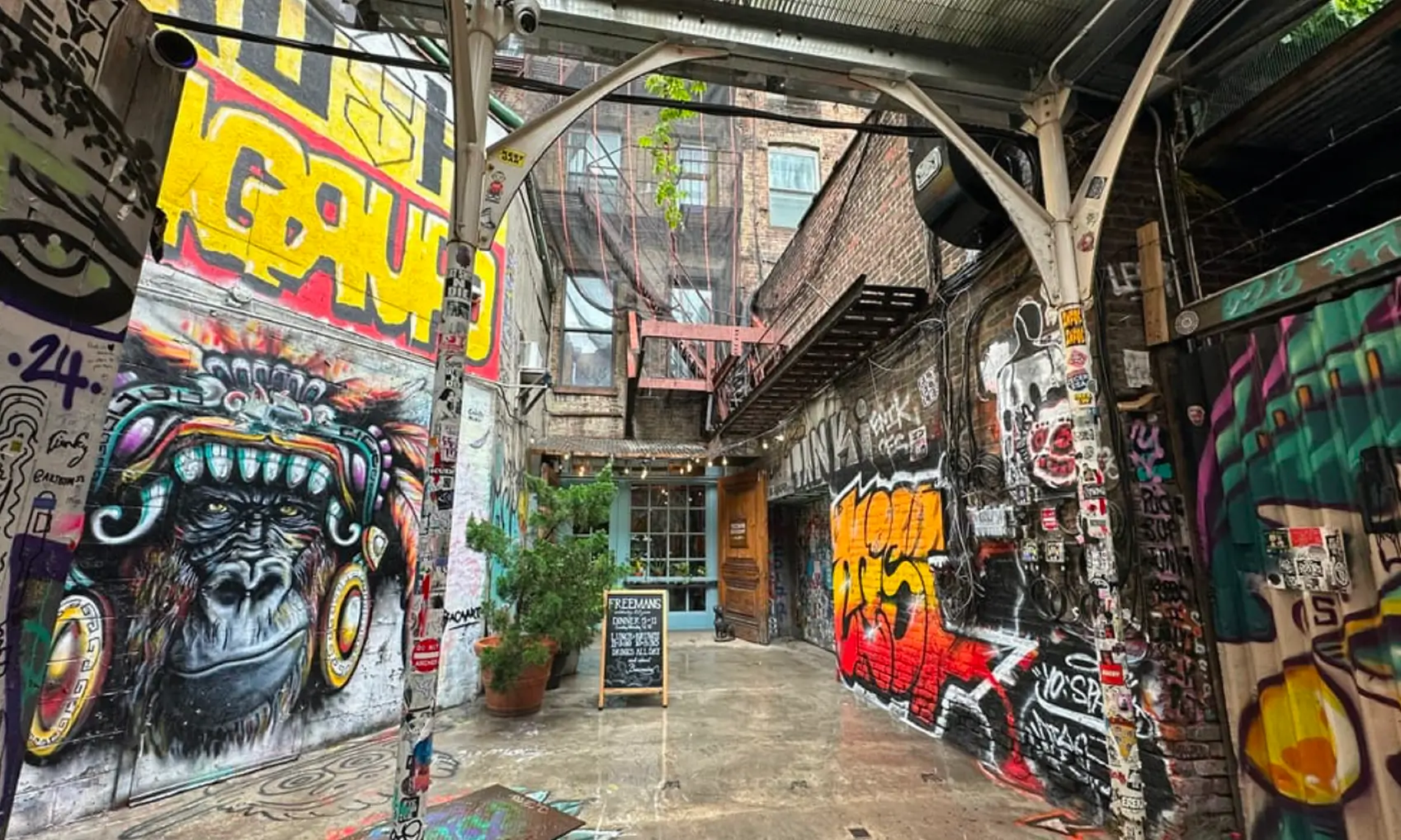
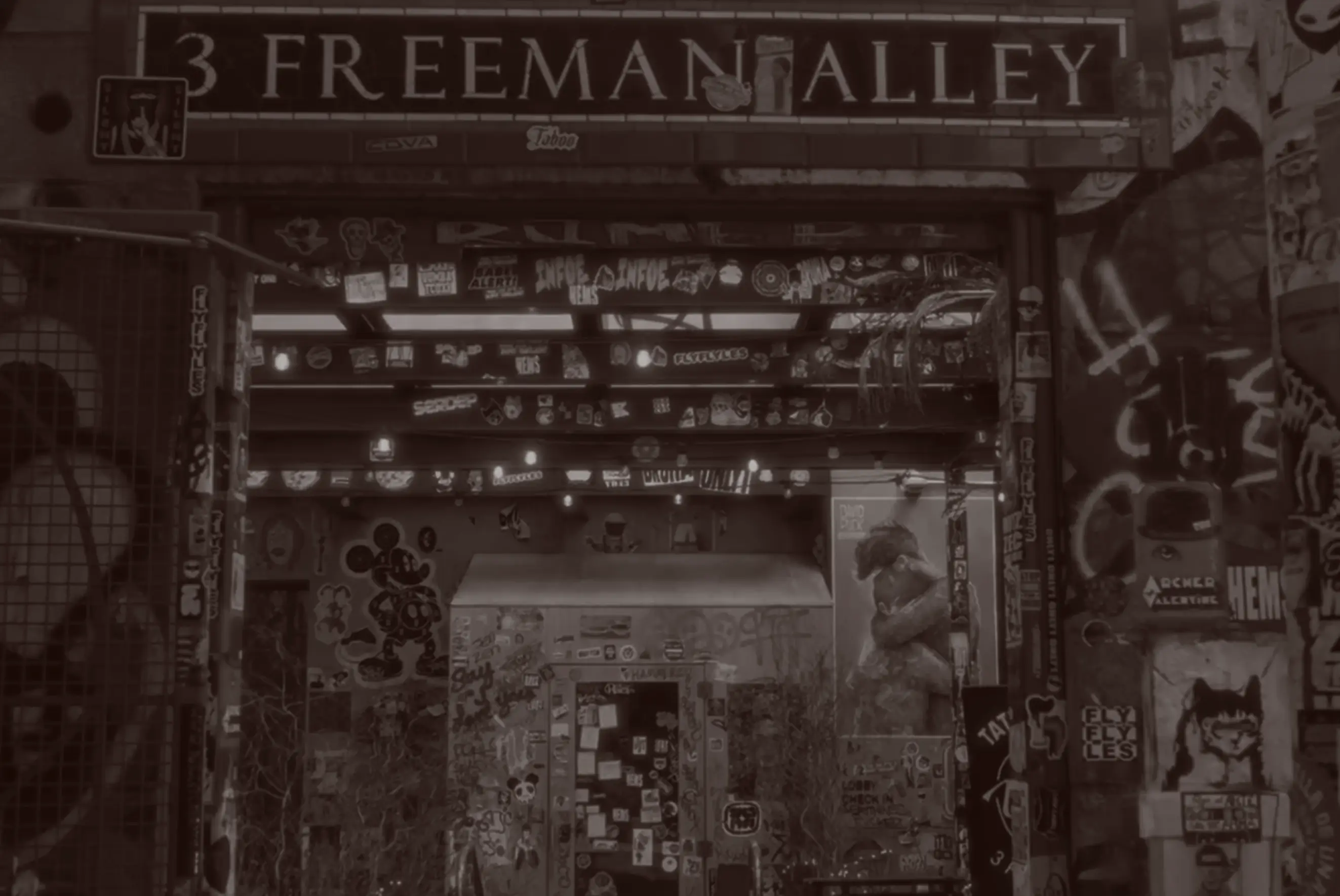
Freeman Alley runs roughly 150 feet off Rivington Street between the Bowery and Chrystie Street. Its walls are almost completely covered in graffiti: tags over murals, stickers over tags, paintings over stickers. But the graffiti is only the latest chapter in the alley’s history.
Long before Freeman Alley became one of the Lower East Side’s most photographed stretches of street art, it was a working back alley. The land was once part of the sprawling Delancey estate, and the passage is believed to have been cut to provide stable access and drainage behind the buildings that eventually crowded the block. It started to appear on neighborhood maps by the late nineteenth century, although without a name.
Its current name remains somewhat of a New York mystery. One theory attributes Freeman Alley to Uzal Freeman, a nineteenth-century surveyor associated with the area. Another suggests the name may be connected to a much more significant piece of Lower East Side history: the Second African Burial Ground, which once occupied land immediately to the east, around what is now Sara D. Roosevelt Park. The cemetery was established in the late eighteenth century after New York’s earlier African burial ground downtown was closed. Black New Yorkers were buried at the Chrystie Street site until the cemetery closed in 1853, and most of the remains were later moved to Cypress Hills Cemetery in Brooklyn. Whether Freeman Alley actually took its name from the burial ground has never been proven, but its proximity is a reminder of just how much history is compressed into this tiny part of Manhattan.
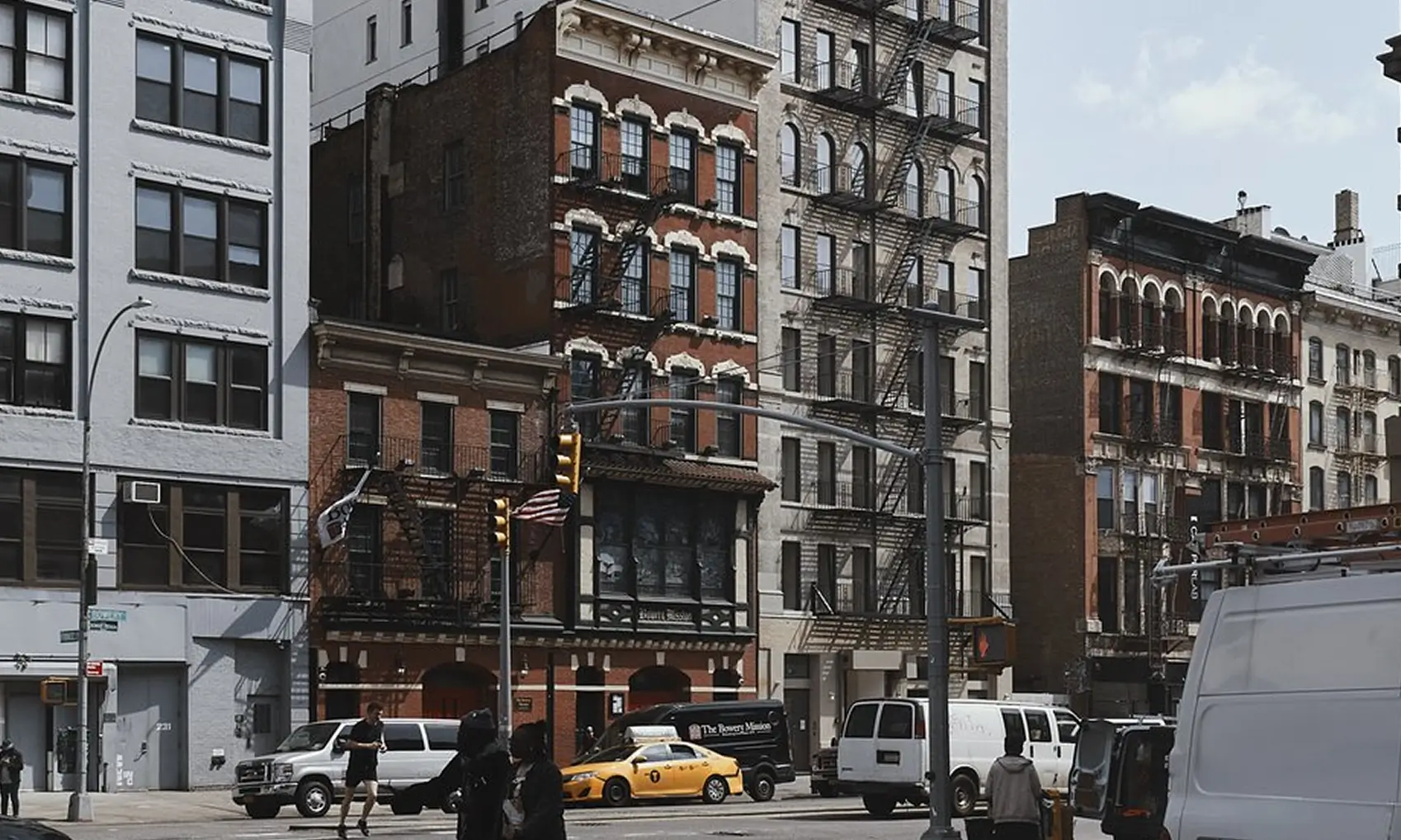
By the beginning of the twentieth century, the alley acquired another role. In 1909, the Bowery Mission moved into 227 Bowery, a building that had previously been used as a coffin factory. Its rear entrance opened toward Freeman Alley, and the alley became the site of the Mission’s breadline. Night after night, men lined the narrow passage waiting to be fed.
This was the Bowery before boutique hotels, galleries, bars and restaurants: for much of the twentieth century, the surrounding blocks were synonymous with flophouses, missions and extreme poverty. Freeman Alley sat just out of sight of the main street, absorbing much of the life happening around it.
Which feels fitting because Freeman Alley isn't technically a normal New York City street at all. Around 1914, the city officially “de-mapped” the alley, relinquishing responsibility for maintaining it as a public street. More than a century later, it remains an unmapped, privately maintained passageway. This is one of the reasons it has retained such an unusual character while so much of Manhattan has been regularized and rebuilt.
By the late twentieth century, Freeman Alley had become part of the downtown art world growing around the Bowery and Lower East Side.
Artist Jimmy Wright bought the former stable at 1 Freeman Alley in 1980 and has lived and worked there for decades. His arrival placed a working artist inside an alley that would eventually become an artwork in itself.
The surrounding neighborhood still looked very different at the time but only blocks away artists, musicians and performers were turning the East Village into one of the most influential creative scenes in the city.
One of those artists was Richard Hambleton. Hambleton became famous in the late 1970s and 1980s for his Shadowman figures — sinister, human-sized silhouettes painted unexpectedly on walls and in doorways around New York and intended to startle passersby. One appeared in Freeman Alley in the 1980s after Hambleton moved into a nearby Rivington Street storefront.
It feels strangely appropriate that street art would eventually become the thing Freeman Alley is best known for. Over the following decades, its walls became an informal, constantly changing gallery. There is no exhibition schedule and very little survives permanently but this is part of the point. Street art elsewhere in Manhattan has increasingly been commissioned, preserved or fenced off. Freeman Alley still feels different. The work is layered rather than displayed, and the evidence of what came before is often visible underneath what is there now.
It was in 2004 that restaurateurs Taavo Somer and William Tigertt opened Freemans, the first major restaurant directly on the alley. Somer originally encountered the space while searching for somewhere to throw a Halloween party. The lot he found was filled with discarded needles and even an abandoned Saab, but he saw the possibility of a restaurant.
Freemans became a downtown institution and, perhaps unintentionally, introduced thousands of New Yorkers to an alley they previously had little reason to enter. Finding the restaurant became part of the experience: leave the Bowery, turn into what looks like an unmarked service passage and keep walking.
Today the alley exists somewhere between several different versions of New York. The Bowery Mission remains next door. The New Museum sits around the corner. Contemporary galleries, restaurants and new residential buildings have joined structures that have stood here for more than a century. And the walls continue to be painted.
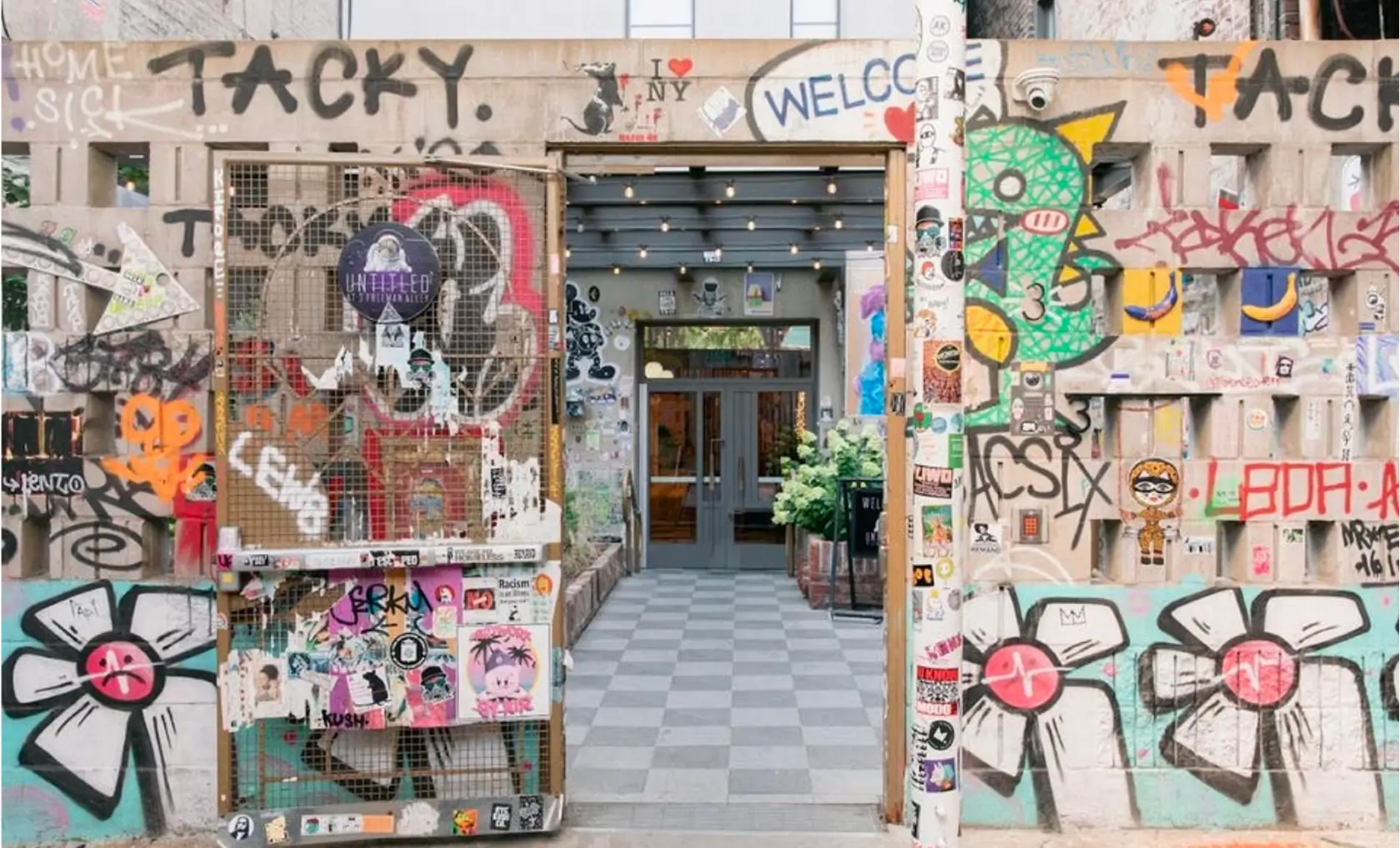
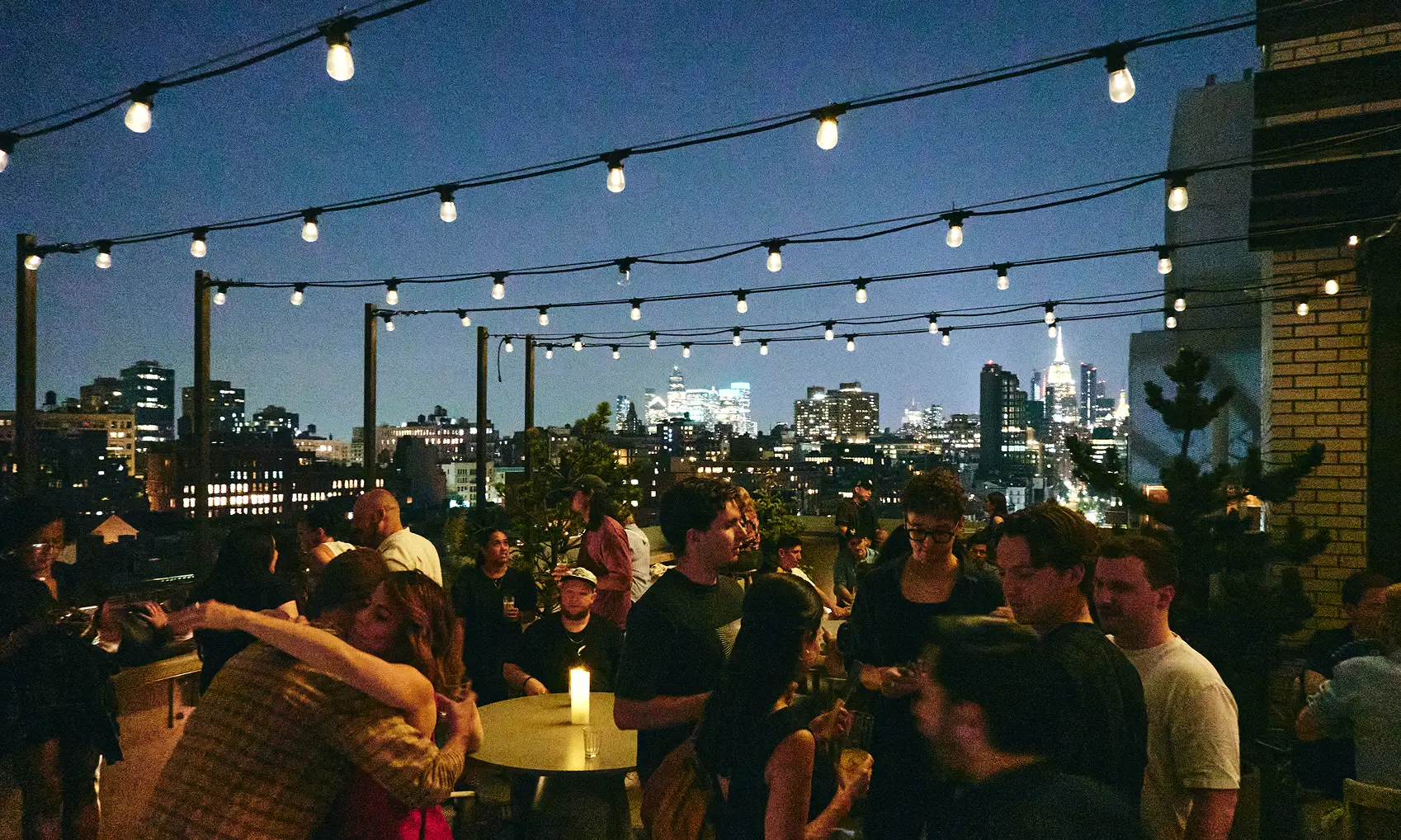
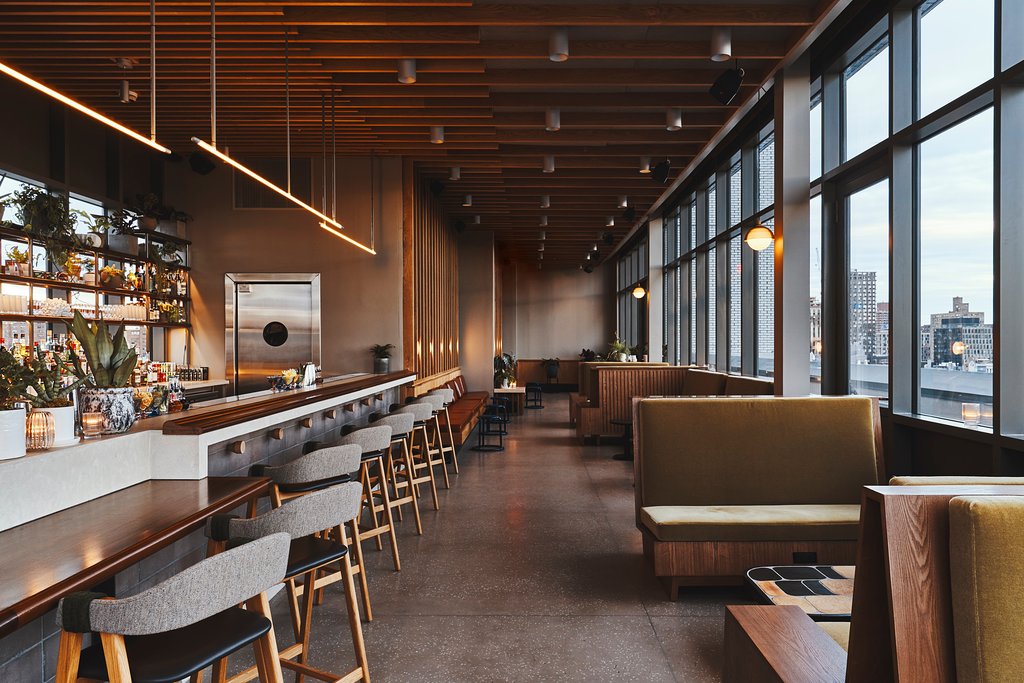
UNTITLED sits at 3 Freeman Alley, with its entrance directly inside the passage. Guests arrive through the same narrow corridor that once provided access to nineteenth-century stables, stood beside one of New York's historic African burial grounds, held the Bowery Mission breadline and later became a canvas for generations of downtown artists. Come back again for your next stay and somebody will have already changed it.
Discover more stories about art, culture, and life around Freeman Alley.

Untitled Gallery
%201.webp)
%201.webp)